
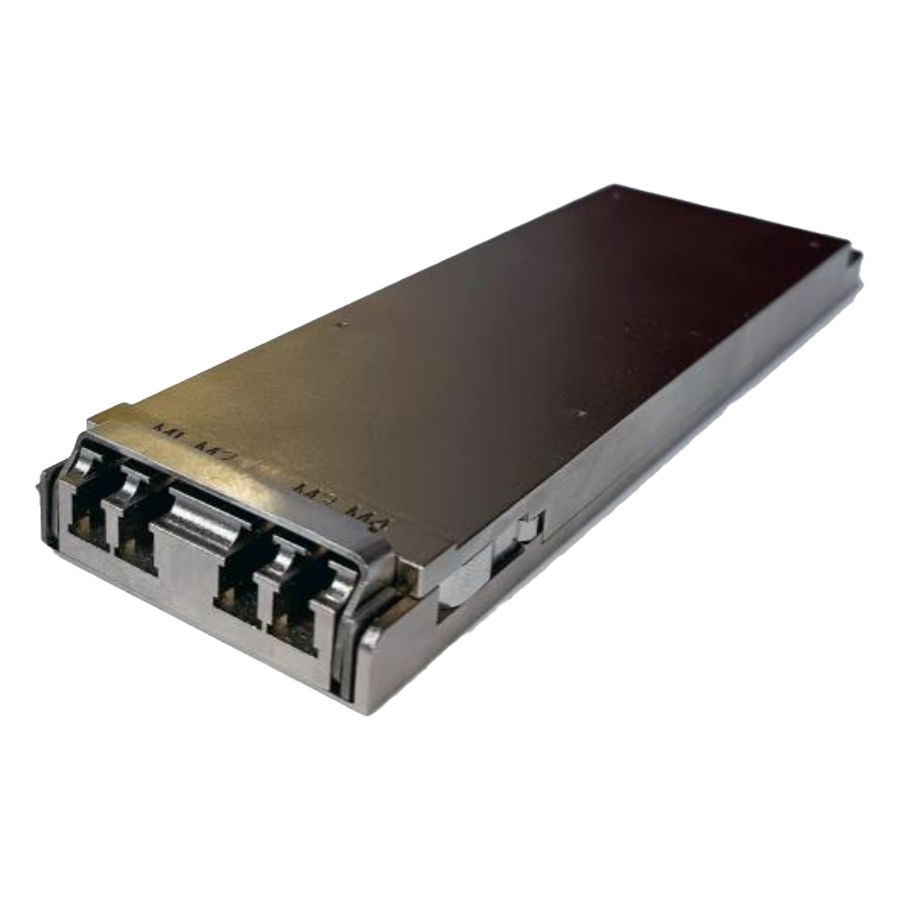
OTC2400 OTDR Module
key word:
Category:
Products
Fiber Optics
describe
In recent years, with the rapid development of optical communication technology, optical cable monitoring systems have been widely used in many fields such as optical communication network maintenance and fiber optic sensing. In particular, with the large-scale promotion and application of Dense Wavelength Division Multiplexing (DWDM) systems, the Optical Time Domain Reflectometer (OTDR) module has shone brightly. It plays an indispensable key role in real-time optical cable monitoring, precise fault location, and in-depth performance analysis of fiber optic links, with increasingly extensive application scenarios. Among them, the OTC2400 OTDR module is unique. It adopts the advanced CFP2 packaging process and ingeniously integrates 4 optical switches internally. Not only is its structural design compact and sturdy, but it also combines excellent cost-performance and high-performance advantages. It has created a convenient and practical card-type OTDR solution tailored for optical cable monitoring operations and DWDM systems, greatly meeting the current industry's needs.
Module Highlights
Compact Built-in Optical Switches
The module, packaged in CFP2 format and supporting hot-swapping, integrates four optical switches. With dimensions of only 136.8×41.5×13.6 mm, it is ideal for optical cable monitoring systems with stringent space and size requirements.
High Performance Metrics
The OTDR module boasts a dynamic range of up to 40 dB, with an event dead zone of 1 meter and an attenuation dead zone of 5 meters. It also features a sampling interval of 12.5 cm and up to 256,000 sampling points to ensure high-precision testing of fiber optic links.
Fast Response
Equipped with a real-time testing mode, the module can update OTDR test results at a high speed of 300 ms, enabling rapid display of results.
High Transmission Rate
The OTC2400 module can complete high-precision testing of fiber optic links within 5 seconds. It supports rapid downloading of card-based OTDR test configurations and quick uploading of test results, making optical cable monitoring more efficient.
Communication Method
The module uses SPI communication, where data interaction between the module and the board software is completed via SPI. During SPI communication, the board operates in master mode while the module operates in slave mode.
OTC2400 Module Diagram

|
Technical Specifications |
|||
|
Model |
OTC2400 |
||
|
Dynamic Range |
32-40 dB (typical value, pulse width 20μs, (SNR=1) at 25℃) |
||
|
Wavelength |
1502±0.5 nm |
||
|
Test Fiber |
10μm/125μm single-mode fiber (ITU-T G.652) |
||
|
Pulse Widths |
3, 5, 10, 30, 50, 100, 275, 500, 1000, 5000, 10000, 20000 ns |
||
|
Test Range |
0.5, 2.5, 5, 15, 40, 80, 120, 160, 200, 240 km |
||
|
Event Dead Zone |
≤1 m |
Attenuation Dead Zone |
≤5 m |
|
Sampling Interval |
0.125 to 2 m |
Sampling Points |
256000 |
|
Reflectivity Setting Range |
1.30000 to 1.80000 |
Linearity |
±0.05 dB/dB |
|
Test Distance Uncertainty |
±(1+0.005%×distance+sample resolution) |
Return Loss Test Accuracy |
±2 dB |
|
Automatic Testing |
Test items: total loss, distance of each event point, loss, return loss or reflectivity |
||
|
Manual Testing |
Test items: transmission distance, binary search, link loss, reflectivity |
|
|
Optical Switch Specifications |
Isolation |
≥60 dB |
|
Repeatability |
≤±0.05 dB |
|
|
Insertion Loss |
≤1 dB (typical value 0.8 dB) |
|
|
Return Loss |
≥45 dB |
|
|
Switching Time |
≤10 ms |
|
|
Switching Life |
≥10^7 cycles |
|
|
Number of Optical Ports |
4 |
|
|
Laser Safety |
IEC 60825-1:2007: CLASS 121 CFR 1040.10 |
|
|
Power Supply |
DC+5±0.1V/IA, DC+3.3±0.1V |
|
|
Interface |
SPI electrical interface |
|
|
Dimensions and Weight |
136.8×41.5×13.6 mm, less than 0.5 kg |
|
|
Environmental Conditions |
Operating Temperature and Humidity: -5℃ to +55℃, ≤95% (non-condensing) Storage Temperature: -40℃ to +70℃ |
|
|
EMC |
EN 61326-1, EN 61000-3-2 |
|
|
Ordering Information |
|
|
Ordering Model |
|
|
|
1, X: Dynamic Range Selection 2, X: OTDR Test Wavelength Selection M: Dynamic range 40-43 dB S: 1502 nm wavelength OTDR H: Dynamic range 38-40 dB N: Dynamic range 35-38 dB L: Dynamic range 32-35 dB |

Related products

FTS510 -- Series Handheld OTDR Tester
Get product quotes for free
Contact us
Address: RoomA-1445, Level 6, No.28 Shangdi Information Road, Haidian District, Beijing, PRC.
Postal code: 100085
Tel:+86 10 82771386/2866/3382
Fax:+86 10 82771782
400 hotline: 400 630 3382
Website: www.opwill.com
OPWILL not only serves major domestic operators, equipment manufacturers, private network users and communication service contractors, but also sells to more than 30 countries and regions in the world.
© 2024 OPWILL Technology (Beijing) Co., Ltd